If you’ve found an old tobacco tin in an attic box or at a flea market, your first question is probably the obvious one: is it worth anything? The honest answer is that most aren’t worth much — but a few are worth a great deal, and knowing the difference comes down to four things.
Rarity is the biggest factor. A tin you can find ten of on any given day will never command a high price, no matter how charming it is. The tins that bring real money are the ones with only a handful of known examples. Common brands — Prince Albert, Velvet, Tuxedo, Sir Walter Raleigh, Dill’s Best, Model, Union Leader — were produced in enormous numbers and turn up constantly. Most examples of these will be worth only a few dollars. That doesn’t make them uninteresting, but it does set expectations.
Condition is everything. This is the factor collectors care about most. A rare tin with scraped lithography, heavy rust, deep dents, or significant fading loses much of its value. The tins that bring top prices have bright, intact graphics and a clean finish. A common tin in pristine condition can sometimes be worth more than a rarer tin that’s been beaten up. When you handle a piece, look closely at the printed surface — that artwork is what collectors are buying.
Age matters less than you’d think. This surprises people. Two identical tins, one a decade older than the other, are worth essentially the same to collectors. Part of the reason is practical: many tins were never dated, and accurately dating them is often impossible. But the deeper reason is that collectors aren’t filling a timeline — they’re after the look. A tin’s visual appeal and rarity drive its value far more than its precise year of manufacture.
The tobacco inside doesn’t add value. Many people assume a sealed tin with the original tobacco still inside is worth more. It isn’t. Collectors want the tin for its graphics, not its contents. A completely sealed, near-mint example might see a small premium — but that’s because of its condition, not the tobacco itself.
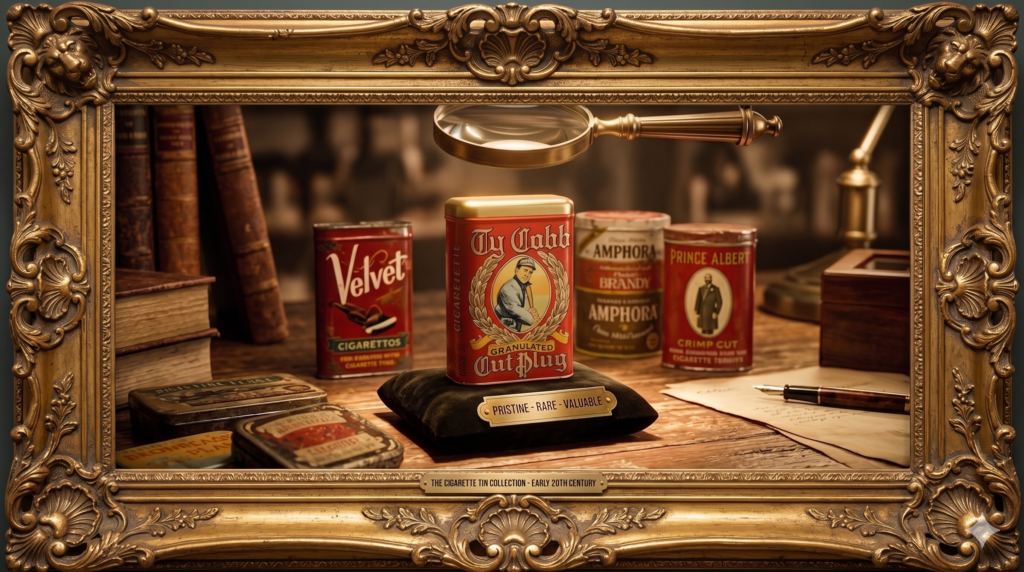
So what does a genuinely valuable tin look like? It’s rare, it’s in excellent condition, and there’s active collector demand for it. Tins that hit all three can sell for hundreds or even thousands of dollars. At the very top of the market, exceptional pieces have set staggering records — a mint 1912 Ty Cobb tobacco tin famously sold for $88,875, prized for its rarity, its display value, and its connection to baseball history.
One quick test for spotting a modern or low-value tin: check for a barcode. If it has one, it was made in recent decades and almost certainly isn’t valuable to collectors.
If you think you have something special, the best move is to get a second opinion from someone who handles these pieces regularly. A clear photo of the actual tin — not a description of “one just like it” — is all an experienced eye usually needs to point you in the right direction.
Have a tin you’re curious about? We’re always glad to take a look. Get in touch or browse our collection to see what well-kept examples look like.