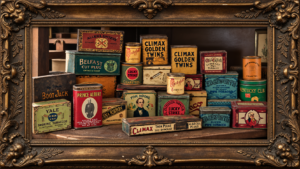

Somewhere in a dusty booth at a flea market, there’s a tin that’s fooled a hundred people before you. Maybe it’s a clever reproduction dressed up to look 80 years older than it is. Maybe it’s a genuinely old piece that’s actually pretty common, priced like it’s the last one on earth. Either way, the tin doesn’t care what you assume about it, and that’s exactly the problem.
Tobacco tins were never meant to last this long. They were disposable packaging, designed to sell a product and then get tossed out or repurposed as a nail bin in someone’s garage. The ones that survived did so by accident, not design.
That accident of survival is precisely what makes antique tobacco tins fascinating: each one is a tiny artifact of advertising, manufacturing, and everyday life from an era that’s otherwise gone. But that same scarcity is what makes the market tricky, full of reproductions, inflated “rarity” claims, and prices that have more to do with a good story than an honest appraisal.
Does “Old” Automatically Mean “Valuable”?
No, this is the mistake nearly every new collector makes at least once. A tobacco tin can be perfectly, verifiably old and still be worth very little, because plenty of examples survived, and nobody in particular wants one. Meanwhile, a tin that looks unremarkable at first glance might be genuinely scarce, a short-lived variant, a regional brand, or a design collectors have been hunting for years.
Value is really the sum of several factors working together:
- Age: when it was actually made
- Rarity: how often the same example turns up
- Condition: complete, clean, damaged, repainted, rusted through
- Brand: is it tied to a name collectors recognize and want
- Design: is the artwork distinctive or forgettable
- Variant: does it differ from the in color, shape, or graphics
- Provenance: is there documented history attached to it
- Demand: are collectors actively chasing this type right now
Look at one example in isolation, and you’ll get a skewed picture. Compare it against several others and the real picture starts to emerge.
How Can You Tell If a Tobacco Tin Is Actually Antique?
Not by looks alone. Rust, faded paint, and a good coat of grime will make almost anything look old, which is exactly why appearance is the least reliable way to judge age.
Deliberately “distressed” reproductions exist specifically to exploit this instinct, while genuinely old tobacco tins sometimes survived in surprisingly good shape. What actually tells you something is the construction: the seams, the hinges, the closures, the way the printing sits on the metal. Does everything about the build match what you’d expect for the period the seller claims?
If a tin is supposedly pre-war but the printing technique, materials, or hinge style feel distinctly modern, that’s your cue to slow down.
Make a habit of asking one simple question before you buy: what evidence actually supports this age claim, beyond how it looks?
Should You Buy a Tin Just Because It Looks Rare?
No, and this is where enthusiasm gets the better of good judgment. “Extremely rare,” “one of a kind,” and “museum quality” show up constantly in listings, and they should be treated as claims to verify, not facts to accept. An unusual shape or unfamiliar brand feels rare, but feeling rare and actually being rare are different things.
Before you pay a premium for rarity, do the legwork: check reference books, collector forums, auction archives, and specialist dealers for comparable examples. If you’re chasing genuine scarcity rather than a good sales pitch, it’s worth seeing what real rarity actually looks like; our roundup of rare pocket tobacco tins every collector dreams of owning is a useful benchmark for the kind of documented, sought-after pieces worth paying a premium for.
If you can’t find a comparable example for the tin in front of you, there are a few possible explanations: you might have genuinely found something uncommon, or it might be a poorly documented variation, a modern reproduction, or simply an unpopular item nobody else wanted either. Those scenarios can look nearly identical until you dig a little.
How Much Does Condition Actually Matter?
A lot, but not in the way most beginners assume. A little age-related wear isn’t a flaw; for most collectors it’s expected, even part of the appeal.
The real skill is telling normal wear apart from damage that actually hurts the piece: heavy rust or corrosion, holes, cracks, missing lids, broken hinges, crushed sections, major paint loss, repainting, artwork scratched away, water damage, or the telltale signs of overly aggressive cleaning.
Condition assessment isn’t identical across every shape and category, either. Humidor tins, for instance, come with their own set of condition concerns: seal integrity, interior lining, hinge stress, that a flat pocket tin never has to deal with.
If that’s the category you’re focused on, our guide on how to judge condition before buying a humidor tin goes deeper into what to check. Don’t assume the shiniest tin in the case is automatically the best one, either.
Is It a Good Idea to Clean an Antique Tobacco Tin?
Usually, no, at least not right away. It’s tempting to reach for a cleaner or polish on a grimy old tin, but aggressive cleaning can strip away original finish, printed detail, and patina, the very things that give a piece its history. Once that’s gone, it’s gone for good.
If you come across something that looks genuinely old and interesting, resist the urge to “freshen it up.” Photograph its current condition first, and if it seems significant, get a second opinion before touching it with anything more aggressive than a soft, dry cloth. For most collectors, originality beats shine every time.
How Do You Spot a Reproduction or Fantasy Piece?
Look closely, mostly at the details sellers don’t always show you. Plenty of modern manufacturers produce decorative tins inspired by old advertising art, and some reproductions are convincing enough to fool a casual glance.
Before buying, especially online:
- Read the listing closely: is it described as an original antique, a reproduction, or a modern decorative piece? Those are three very different things, and “vintage-style” doesn’t mean vintage.
- Ask to see photos of the underside, hinges, seams, and edges, not just the front artwork.
- If anything about the construction or finish feels inconsistent with the claimed era, ask questions before you buy, not after.
A trustworthy specialist source can shortcut a lot of this guesswork. Browsing a dealer like Up in Smoke Antiques’ vintage tins and containers collection is a low-stakes way to train your eye on what authentic construction and aging actually look like, so you’re better equipped when evaluating a listing elsewhere.
Should You Always Buy the Most Expensive Tin Available?
No. Price reflects a mix of condition, rarity, branding, completeness, and demand, and any one of those can be inflated without the others backing it up. Instead of asking “is this expensive,” ask “what, specifically, am I paying for at this price?”
If you’re eyeing a costly piece, compare it against similar examples and, where you can, check recent sale prices rather than just asking prices. Collecting isn’t a competition; a modestly priced tin with artwork you genuinely love can give you more satisfaction on your shelf than an “investment-grade” piece bought mostly to impress someone else.
What Photos Should You Ask for Before Buying Online?
More than the seller gave you by default. Shopping online strips away the one advantage physical antique shopping gives you: holding the object and turning it over in your hands. Photos have to do all that work instead, so don’t settle for three flattering angles.
Ask to see the front, back, both sides, top, bottom, and interior, plus close-ups of hinges, seams, closures, and any manufacturer markings, and any damage, clearly. Ask for measurements too; a tight crop can make a small tin look enormous.
Why Does Researching the Brand Matter?
Because it gives you context a generic search never will. Searching the exact wording, slogan, or trademark printed on the tin will get you much further than a generic search for “antique tobacco tins.”
The specific brand can tell you the approximate period, the regional market it was sold in, and whether known variations exist- context that often separates a genuinely interesting piece from one that merely looks old. Serious collectors keep notes on these details over time; it becomes part of the hobby itself.
Does Provenance Make a Tin More Valuable?
Sometimes, but only if it’s documented. A history can make a tin more compelling, especially if it connects the piece to a specific business, collection, or event. But a family story and documented provenance aren’t the same thing.
“This belonged to my grandfather” is a nice anecdote; it’s not evidence, and it shouldn’t move the price. Enjoy the story if you get one, but evaluate the tin on its own merits.
Is It Okay to Buy a Tin That’s Been Restored or Repaired?
It depends on what you want from your collection, and it’s fine either way, as long as it’s disclosed. Some collectors want untouched originals only; others are perfectly happy with a piece that’s been stabilized or repaired.
What matters is knowing exactly what’s been done: repainted, relabeled, resoldered, reconstructed, or professionally conserved. A disclosed repair on a display piece is a non-issue. An undisclosed repaint sold as “original condition” is a real problem. Ask directly, and be wary of sellers who dodge the question.
How Should You Start a Tobacco Tin Collection?
With curiosity, not a spreadsheet. You don’t need to chase the rarest or most expensive antique tobacco tins to build something meaningful, and you definitely don’t need a big budget to get started.
In fact, some of the smartest entry points are the categories other collectors overlook. Tiny sample tins, for instance, were given away as promotional giveaways and are often cheap, plentiful, and full of charm; see why tiny tobacco sample tins are a smart first buy if you want a low-risk way into the hobby.
Lunch box–style tins are another underrated category; collectors chasing pocket tins often skip right past them, which is exactly why tobacco lunch box tins collectors overlook and shouldn’t make for such good early finds.
Pick a lane that genuinely interests you, a brand, an era, a region, a graphic style, a shape, a color palette, and let that give your collecting direction without turning it into homework. Don’t be afraid to buy something purely because the artwork stops you in your tracks.
What’s the Single Best Way to Avoid Overpaying?
Slow down. Before you commit to anything, especially a costly piece: confirm whether it’s original or a reproduction, read the listing’s exact wording, scrutinize the photos (or request better ones), and compare it against other examples before deciding it’s the find of the century.
The best collections aren’t built on impulse. They’re built on curiosity, patience, and the occasional lucky find you stumbled into while looking for something else entirely.
If you want to keep training your eye, Up in Smoke Antiques is worth browsing regularly, and if you ever decide to part with old tobacco tins that no longer fit your collection, their Sell to Us option is worth a look too.
FAQs
- Are Antique Tobacco Tins Valuable?
Some antique tobacco tins can be valuable, depending on their age, rarity, condition, brand, and collector demand. However, age alone does not guarantee a high value. - How Can I Tell If a Tobacco Tin Is Antique?
Examine its construction, seams, hinges, printing techniques, and overall design. Compare these details with documented examples to help verify the tin’s age and authenticity. - What Makes Vintage Tobacco Tins Collectible?
Rare designs, sought-after brands, unusual shapes, well-preserved original finishes, and historical or advertising significance can all increase a tobacco tin’s appeal to collectors. - Should I Clean an Old Tobacco Tin?
Avoid aggressive cleaning until you understand the piece’s condition and potential value. Harsh cleaning methods can damage original paint, graphics, and natural patina that collectors often appreciate. - Where Can I Buy Antique Tobacco Tins?
Specialist antique dealers and curated online collections are good places to start. Up in Smoke Antiques offers a selection of vintage tins and containers worth exploring.