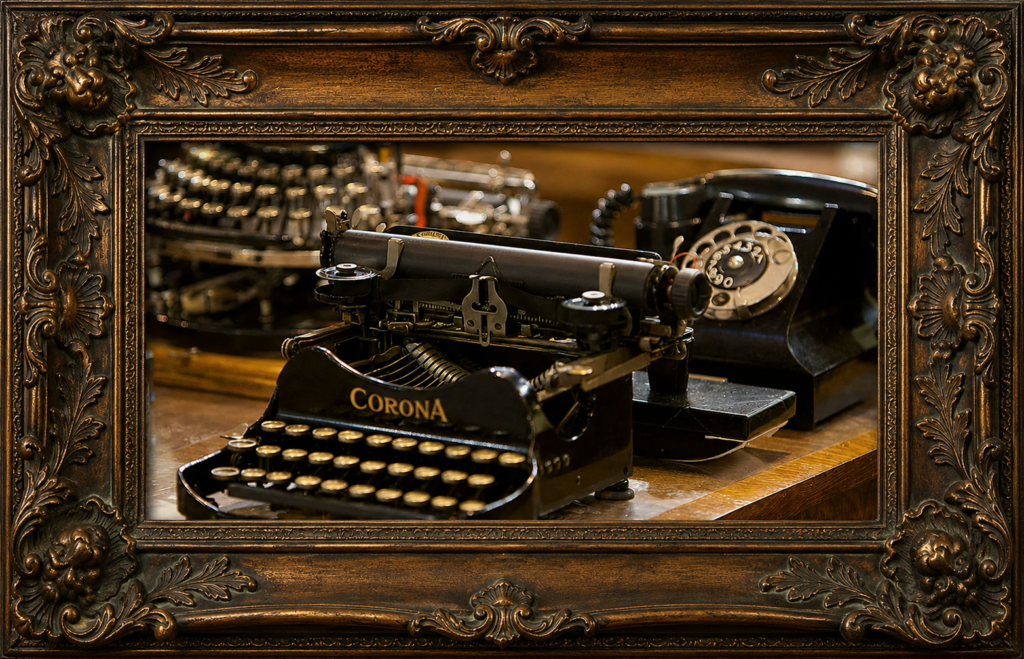
There’s a particular satisfaction to an old typewriter the weight of it, the clatter of the keys, the way it turns writing back into something physical. As collecting has surged over the past decade, more of these machines are coming out of attics and estate sales. If you’ve found one, the first question is usually the same: is it worth anything? The answer comes down to four things.
Start by identifying the machine. Nearly every typewriter carries its maker’s name and model on the front, the paper rest, or above the keyboard. Once you have the brand and model, find the serial number — usually stamped on the frame, often beneath the carriage on the right side. Entering that serial number into a resource like the Typewriter Database (typewriterdatabase.com) will give you the year of manufacture for most major brands. Knowing exactly what you have, and when it was made, is the foundation for everything else.
Understand antique versus vintage. The distinction matters to collectors. A machine 100 years old or more — generally those made before the 1920s — is considered a true antique, and early examples from makers like Remington often command the highest prices. Machines from the 1920s through the 1970s are “vintage.” Most mid-century office typewriters fall into this later group, and while they’re wonderful objects, the majority are modestly valued simply because so many survive.
Know which brands collectors chase. Six names dominate the collectible market: Underwood, Royal, Remington, Smith-Corona, Olivetti, and the European makers Olympia and Hermes. The Underwood No. 5, introduced in 1900, sold millions and is the classic “typewriter shape” most people picture common, but iconic. Among portables, the Swiss-made Hermes 3000 is prized by many as the finest ever built, and Italian Olivetti machines are celebrated for their design (the Olivetti Valentine sits in the permanent collection at MoMA). German Olympia portables command a premium for their build quality. Knowing the hierarchy helps you spot the difference between a common machine and a special one.
Condition is where value is made or lost. After brand and model, nothing matters more. A working machine — one that types cleanly, with a smooth carriage and functioning keys is typically worth several times a decorative-only example. A few specific things collectors look for:
- Glass keys on early machines can add a significant premium over later plastic keys.
- The original case — especially a matching one for a portable — can add meaningfully to value.
- Original decals, clean paint, and no rust all count.
- Unusual colors or fonts are sought after, since most machines were black with standard type.
One reassuring note for anyone holding a rough-looking machine: unlike many antiques, typewriters can be repaired, and collectors don’t shy away from a machine that needs work. A dusty, sticky typewriter may be worth more than its condition suggests, simply because someone knows how to bring it back.
A word on restoration. Do less rather than more. Gentle cleaning is fine, but repainting or heavy restoration can strip a machine of its authenticity and, with it, its value. If a valuable machine needs serious attention, a typewriter specialist is worth the call before you do anything irreversible.
Most common mid-century typewriters are modestly valued, but rare early models, machines in exceptional condition, and those with special features or unusual colors can be worth a great deal. As with all our pieces, the honest markers: the brand, the age, the condition, the originality tell the real story.